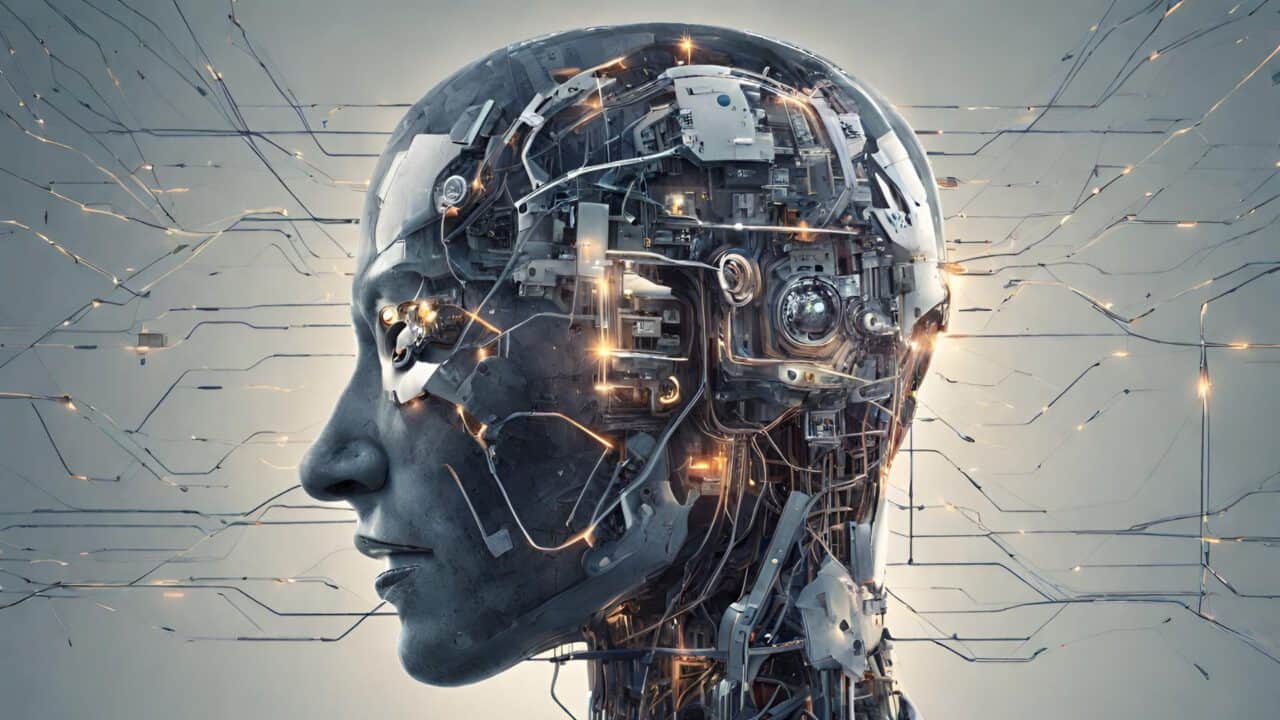
Trying to predict the “next big thing” in tech is a fool’s errand. What’s far more valuable is spotting the convergence points—where multiple streams of research, consumer demand, and raw processing power collide to create not just a new gadget, but a new reality. For 2025, we’re not looking at incremental updates. We’re witnessing the maturation of technologies that will fundamentally reshape industries, redefine human capability, and rewire our daily experiences.
This isn’t about slightly better phones or faster laptops. This is about the technologies that cross the chasm from “promising prototype” to “integrated system,” ready to change the rules of the game. Let’s explore the innovations that will move from the lab and the launch event into the fabric of our lives in 2025.
The Paradigm Shift: From Connectivity to Intelligence
The last decade was defined by connectivity—getting everything and everyone online. 2025 will be defined by what happens next: applied intelligence. It’s the year the connected world gets a unified nervous system and begins to act with context, prediction, and a degree of autonomy. The innovations below are the key nodes in that emerging nervous system.
1. Generative AI Grows Up: From Party Trick to Professional Co-Pilot
The hype cycle of 2023-24 will give way to the integration cycle of 2025. Generative AI won’t be a separate chatbot you visit; it will be baked into every professional and creative tool you use.
- The Revolution: Imagine a video editing software where you can type, “Make the speaker look more confident, soften the background, and add captions in the style of a TechCrunch video.” Or a CAD program where you describe a mechanical part’s function and constraints, and it generates 10 optimized 3D models for you to choose from. This is multimodal AI—seamlessly understanding and generating across text, image, audio, video, and 3D space.
- Why 2025? The underlying models (like OpenAI’s o1, Google’s Gemini, and open-source alternatives) are achieving the reliability and reasoning depth required for professional-grade work. They’re moving from creative parrots to reasoning assistants.
2. The Spatial Computing Launchpad: AR Finds Its “iPhone Moment”
Augmented Reality has been perpetually “five years away” for a decade. 2025 is when the foundational hardware and software finally align to create a compelling, mainstream-adjacent product category.
- The Revolution: Devices like the Apple Vision Pro and its anticipated cheaper successors, along with Meta’s Quest line, will move beyond clunky gaming and demo reels. The killer app will be spatial productivity and persistent digital workspaces. Your virtual monitors, sticky notes, and 3D models will stay pinned in your physical room. Repair technicians will see holographic schematics overlaid on machinery. Students will dissect a virtual frog on their kitchen table.
- Why 2025? The tech—high-resolution micro-OLED displays, powerful on-device AI chips, and precise eye/hand tracking—has reached a threshold of comfort and fidelity. The developer ecosystem, spurred by 2024’s hardware launches, will have built the must-have applications.
3. AI-Native Hardware: The End of the Generic Device
Our phones and laptops are general-purpose computers. The next wave is hardware designed from the ground up to run AI models locally, efficiently, and privately.
- The Revolution: We’ll see the first wave of “AI Phones” and “AI PCs” with dedicated Neural Processing Units (NPUs) powerful enough to run complex personal AI assistants that learn from your data without sending it to the cloud. Your device will become a true digital twin, capable of writing in your style, managing your schedule proactively, and filtering your reality based on your current goals—all offline.
- Why 2025? Chipmakers like Qualcomm (Snapdragon X Elite), Apple (M4 chip), and Intel (Core Ultra) are shipping silicon with NPUs boasting 40+ TOPS (Trillions of Operations Per Second), the benchmark for advanced on-device AI. The software (Windows 11 with Copilot+, Apple’s evolving AI integration) is being rewritten to leverage it.
4. Robotics Leaves the Cage: Beside Us, Not Just in Factories
Robotics will make the leap from structured industrial environments to dynamic human spaces.
- The Revolution: Tesla’s Optimus and competitors like Figure AI will move from slick reveal videos to early, real-world beta testing in controlled environments like warehouses and factory floors alongside humans. More immediately, we’ll see an explosion of domestic and service robots—not Rosie the Maid, but hyper-specialized bots: a laundry-folding robot, a window-cleaning drone that lives on your sill, or an elder-care companion that can fetch items and detect falls.
- Why 2025? The convergence is here: AI (for real-time perception and decision-making), cheaper and better sensors (LiDAR, tactile), and advanced battery tech are making mobile, dexterous robots technically and economically viable for more tasks.
5. The Decentralized Physical Infrastructure (DePIN)
This is the sleeper hit. DePIN uses blockchain and crypto-economic incentives to build and maintain real-world physical infrastructure—wireless networks, data storage, energy grids—in a decentralized way.
- The Revolution: Projects like Helium Mobile (decentralized 5G) and Hivemapper (decentralized Google Street View) are early proofs-of-concept. In 2025, we’ll see this model scale. Imagine earning tokens for sharing your home Wi-Fi’s excess bandwidth, or for contributing data from your home weather station to a hyper-local forecast network. It turns users into owners and builders of the infrastructure they use.
- Why 2025? The regulatory and technical frameworks are maturing. As consumers and businesses look for resilient, community-owned alternatives to centralized corporate giants, the token incentive model provides a powerful new tool for bootstrapping networks.
6. The Interface Revolution: Beyond Screens
Our primary interface with tech has been a piece of glass we poke at. That’s changing.
- Brain-Computer Interfaces (BCI): Neuralink’s first human trials will generate massive attention, but the real 2025 story is in non-invasive BCIs. Companies like Synchron and NextMind are making strides with devices that read neural activity through the scalp or blood vessels, offering control of devices for the severely disabled—a profound humanitarian impact and a stepping stone to broader use.
- AI Wearables: The Humane Ai Pin and Rabbit R1 are just the beginning. The race is on to create an intuitive, screenless AI interface you wear. In 2025, we’ll see which interaction model—voice-first, laser projections, or something else—gains traction, challenging the smartphone’s dominance.
Conclusion: The Year of Integration and Implication
2025 won’t be remembered for one standalone “iPhone.” It will be remembered as the year we started living inside the tech stack. The innovations above are not siloed; they will converge. Your AI assistant (Innovation #1), running on your AI-native laptop (#3), will help you design a 3D model (#1) that you manipulate in your AR workspace (#2), which is then manufactured by a collaborative robot (#4), all connected via a decentralized network (#5).
The revolution is no longer about the device in your hand, but the intelligent, interconnected ecosystem that hand is now a part of. The question for 2025 shifts from “What cool new tech can I buy?” to “How is this new layer of intelligence and connectivity changing how I work, create, and interact with the world?” The answers will define the decade to come.
FAQs
1. Which of these innovations will have the most immediate impact on the average person?
Generative AI integration into common software will be the most pervasive and felt. Millions of office workers, students, and creatives will suddenly have a powerful co-pilot in Microsoft Office, Adobe Creative Cloud, and Google Workspace, changing daily workflows almost overnight. It’s a software update, not a new hardware purchase, making its adoption swift and widespread.
2. Are Spatial Computing devices like AR glasses really going to be mainstream in 2025?
Mainstream-adjacent, not fully mainstream. 2025 will be the year they move from “developer/enthusiast curiosity” to a legitimate professional tool and a coveted consumer luxury item. Think the iPad in 2010—not everyone had one, but it clearly defined a new category and its potential. Price and social acceptance will keep it from true ubiquity, but its “why” will become crystal clear.
3. What’s the biggest obstacle to these innovations?
The Dual Challenge of Power and Privacy.
- Power: Advanced on-device AI and always-on sensors are power-hungry. Battery technology needs a parallel leap.
- Privacy: As devices become more context-aware and personalized, they require staggering amounts of personal data. Building this future in a way that earns public trust, with clear data ownership and usage policies, is not a technical challenge but a societal one that will make or break adoption.
4. I’m an investor/business owner. Which trend has the most commercial potential?
DePIN (Decentralized Physical Infrastructure). While others are competitive markets dominated by tech giants, DePIN represents a new economic and infrastructural model. It’s a greenfield opportunity to build the foundational networks (data, energy, connectivity) for the next era of tech. The potential to disrupt trillion-dollar telecom and utility industries is enormous, and we’re still in the very early innings.
5. Should I be worried about AI and robots taking jobs in 2025?
2025 is more about job transformation than job elimination at scale. The technologies will act as powerful force multipliers. The immediate risk is a growing performance gap between those who use AI/robotics as co-pilots to enhance their skills and those who don’t. The focus should be on adaptation and augmentation. The jobs that disappear will be specific, repetitive tasks, not entire professions overnight. The bigger shift in job markets will likely follow in the latter half of the decade.