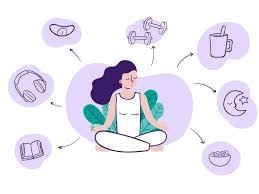
Let’s clear something up right away. Self-care is not a scented candle you light after your life has already burned to the ground. It’s not an indulgence or a hashtag. In the context of modern living—a relentless barrage of notifications, 24/7 connectivity, and performance pressure—self-care is survival. It’s the essential maintenance required to keep the most complex system you’ll ever operate—you—from glitching, crashing, or quietly burning out.
But here’s the modern trap: we’ve commercialized self-care into another to-do list item, another thing to “optimize.” That’s not it. True self-care is less about buying and more about boundarying. It’s the art of strategically disconnecting to reconnect with yourself. These practices aren’t luxuries; they are the non-negotiable fundamentals for staying sane, healthy, and human in an inhumanly busy world.
The Modern Self-Care Mandate: From Pampering to Preservation
Forget spa days for a moment. In a world that wants your attention 24/7, the most radical act of self-care is to withhold it. To be unavailable. To be bored. To be quiet.
Modern self-care is about building a personal ecosystem that filters out the toxic stressors of digital life and nourishes your core well-being. It’s not about adding more; it’s often about skillfully subtracting. Let’s build your essential maintenance routine.
The Foundational Four: Non-Negotiable Maintenance
These are the baseline practices. Without these, everything else is just rearranging deck chairs on the Titanic.
1. Digital Fasting: The Information Diet
Your brain was not built for the firehose of global information and social comparison.
- The Practice: Implement a daily “circadian fast” from screens. No phones for the first hour after waking (protect your morning mindset) and the last hour before sleep (protect your melatonin). Add one 24-hour period per month—a “tech Sabbath”—where you avoid all non-essential screens.
- Why It’s Essential: This practice directly reduces anxiety, improves focus, restores natural sleep rhythms, and gives your nervous system a break from the fight-or-flight triggers of the news cycle and social media. It creates space for your own thoughts to emerge.
2. Boredom Cultivation: The Gateway to Creativity
We have pathologized stillness. We reach for our phones in every micro-moment of waiting.
- The Practice: Schedule 10 minutes of mandatory boredom into your day. Sit. Stare out the window. Go for a walk without a podcast. Do a mundane chore without audio input. Let your mind wander.
- Why It’s Essential: Boredom is the incubator for creativity and problem-solving. It allows your brain’s default mode network to activate, processing emotions, consolidating memories, and generating new ideas. It is the antidote to reactive, frazzled thinking.
3. Sensory Resets: Grounding in a Virtual World
Modern life lives in our heads and on screens. We must actively reclaim our bodies and our senses.
- The Practice: Engage in a daily 5-minute sensory reset. This could be: splashing very cold water on your face (a powerful nervous system reset), walking barefoot on grass, deeply inhaling the scent of fresh coffee or an orange, or simply focusing on 5 things you can see, 4 you can touch, 3 you can hear, 2 you can smell, 1 you can taste.
- Why It’s Essential: This yanks you out of anxious future-tripping or ruminative past-dwelling and plants you firmly in the present moment—the only place where peace exists. It’s a hard reset for a frazzled nervous system.
4. Compassionate Self-Talk Audits: Managing Your Inner CEO
The most constant stream of input you receive is your own inner monologue. Is it a critical boss or a supportive coach?
- The Practice: Twice a day, pause and notice your self-talk. Are you calling yourself “stupid” for a mistake? Berating yourself for being tired? Gently, without judgment, reframe it. “I’m learning.” “I’m human and need rest.” Talk to yourself as you would to your best friend in the same situation.
- Why It’s Essential: You cannot outperform your own self-image. Chronic, harsh self-criticism is a direct source of internal stress and burnout. Cultivating self-compassion is the single most important psychological skill for resilience.
The Enhancement Layer: Practices for Sustained Vitality
Once the foundation is stable, these practices build lasting energy and joy.
5. Joy Micro-dosing
We wait for big, orchestrated moments of happiness. Joy is found in tiny, daily sips.
- The Practice: Intentionally identify and savor one “micro-joy” every single day. The warmth of the sun on your skin for 30 seconds. The first sip of a perfect drink. The sound of a loved one’s laugh. Don’t just experience it; pause and absorb it. Let it register.
- Why It’s Essential: This trains your brain to scan for positives, building an “anti-fragile” psyche that can endure stress because it is consistently nourished by small, reliable pleasures.
6. The “Finish Line” Ritual
Modern work has no natural end. Emails bleed into nights, tasks feel infinite.
- The Practice: Create a definitive end-of-work ritual. Shut down your computer, say a literal phrase like “My workday is complete,” tidy your desk, or go for a short walk. This creates a psychological boundary, signaling to your brain that it’s time to shift from “productivity mode” to “person mode.”
- Why It’s Essential: Without a finish line, you are perpetually “on call” to your own expectations, leading to chronic stress and the inability to truly rest. This ritual protects your recovery time.
7. Social Media Sovereignty
Passively scrolling is toxic. Conscious connecting can be nourishing.
- The Practice: Change your relationship with social media from passive consumption to active curation. Unfollow anyone who makes you feel inadequate, anxious, or irritable—even if they’re family. Mute noisy group chats. Use the platform intentionally: to share your creative work, to message a friend directly, to learn a specific skill. Then log off.
- Why It’s Essential: You are the curator of your mental environment. This practice removes the constant drip of comparison and outrage, turning a potential stressor into a (briefly) useful tool.
Conclusion: The Un-Glamorous, Un-Sexy, Vital Work
Modern self-care is profoundly un-glamorous. It’s turning off the Netflix you’re half-watching to go to bed. It’s leaving your phone in another room during dinner. It’s staring at a wall for 10 minutes. It’s saying “no” to protect your “yes.”
These practices are not about adding a lavender bath to your overwhelmed schedule. They are about strategically removing the sources of overwhelm and fortifying your inner core. They are the daily, humble habits of preservation that allow you to show up in the world not as a drained resource, but as a grounded, resilient human being.
Start with one foundational practice. Master the Digital Fast or the Sensory Reset. This isn’t about pampering; it’s about building your psychological immune system. In the modern world, that’s the most essential care there is.
FAQs
1. I don’t have time for self-care. Isn’t that the whole point?
The “I don’t have time” feeling is the clearest signal that you need it most. You don’t have time not to. Start with micro-practices integrated into what you already do. The 5-minute sensory reset can be in the shower. The self-talk audit can be on your commute. Boredom cultivation can be while waiting for the microwave. It’s about quality of attention, not large blocks of time.
2. Is self-care selfish?
It is the furthest thing from selfish. Imagine you’re on a plane and the oxygen masks drop down. You must secure your own mask before assisting others. Self-care is that oxygen mask. You cannot sustainably care for others—children, partners, colleagues—if your own systems are depleted. It’s the foundation of responsible contribution.
3. What if these practices just make me more aware of my stress?
That is the first and necessary step. You can’t fix a problem you’re numb to. The initial awareness can be uncomfortable, like turning on a light in a messy room. Stick with it. The practice is not the cause of the stress; it’s the revealer. Now you can begin to clean the room, starting with one small, manageable corner.
4. How do I deal with people who get upset at my new boundaries (like not answering after 7pm)?
Communicate proactively and positively. “I’m trying to be more present in my evenings so I can be more focused during the day. You can always text me, and I’ll get back to you first thing in the morning!” Most reasonable people will respect a clear, communicated boundary. Those who don’t are showing you that they valued your constant availability more than your well-being.
5. I’ve tried self-care but I still feel burned out. What’s missing?
You may be in “Taskmaster Self-Care” mode—turning relaxation into another performance. “I must meditate for 20 minutes perfectly!” True self-care asks a gentle question: “What do I need right now?” Sometimes it’s a brisk walk. Sometimes it’s calling a friend. Sometimes it’s permission to do absolutely nothing without guilt. Listen to the answer beneath the shoulds. Self-care is an inner dialogue, not an external checklist.