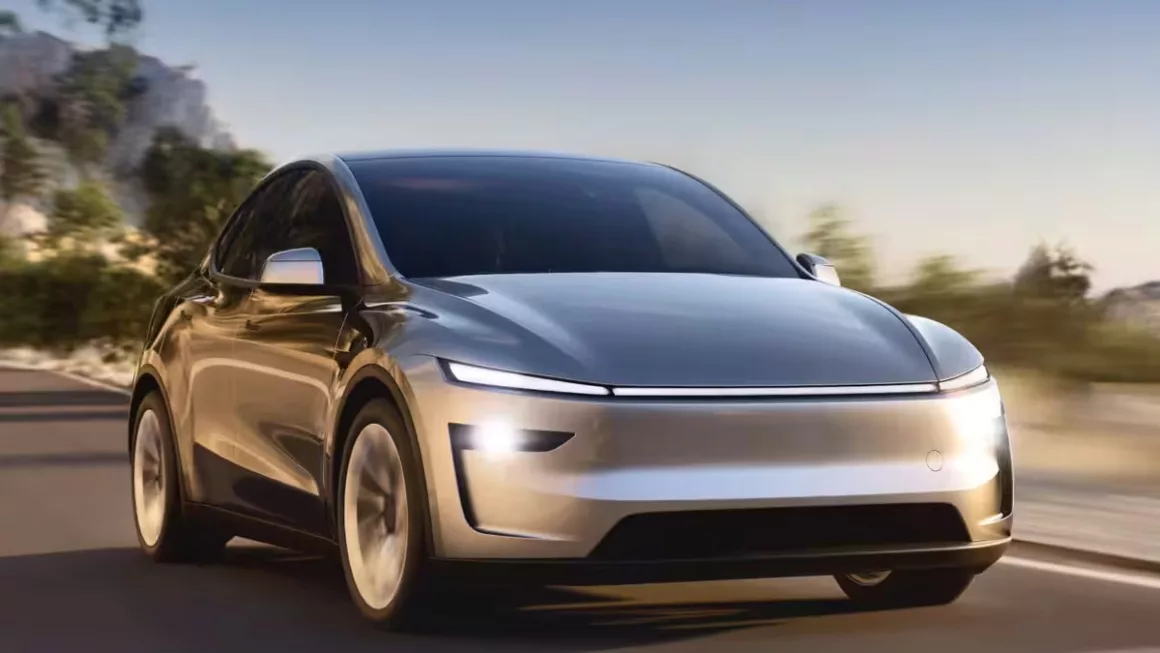
Look around. It’s happening. That near-silent whoosh as a car pulls away from a traffic light, the distinctive design of a new model without a grille, the growing clusters of charging stations at your local supermarket. Electric Vehicles, or EVs, are no longer a quirky niche for early adopters or a distant promise of the future. They are, unmistakably and decisively, taking over the roads. But have you ever stopped to ask yourself why? Is it just about being “green,” or is there a more powerful, more compelling revolution happening right under our noses—or rather, right under our wheels?
The shift from the familiar growl of the internal combustion engine to the quiet hum of an electric motor isn’t just a change in fuel type. It’s a complete transformation of the automotive experience, driven by a perfect storm of technological breakthroughs, economic realities, and a fundamental change in what we, as drivers, want and expect from our cars. Let’s plug in and explore the powerful currents driving this seismic shift.
Beyond the Trend: This is a Fundamental Shift
First, let’s be clear: this isn’t a fad like a new car color or a flashy tech gizmo that fades in a few years. The move to electric propulsion is a foundational change akin to the transition from horse-drawn carriages to automobiles over a century ago. We are witnessing the early stages of a complete reimagining of personal transportation, and the momentum is now self-sustaining. The question has shifted from “if” to “how quickly.”
The Convergence of Forces
Think of it like a rocket launch. For liftoff, you need multiple stages to ignite in sequence. The EV revolution has had its own launch sequence:
- The Spark: Early, expensive, limited-range models proved the concept was viable.
- The Sustained Burn: Tesla’s masterstroke—making EVs desirable, high-performance, and connected.
- The Main Engines: Massive, multi-billion-dollar commitments from every major legacy automaker—Volkswagen, Ford, General Motors, Hyundai, and more.
- Orbital Velocity: Widespread consumer acceptance, infrastructure build-out, and policy support.
We are now in that final stage, where the vehicle is in orbit and the path is set. Let’s break down the specific engines of this takeover.
The Silent Heart: Unpacking the Core Advantages of EVs
The appeal of an EV isn’t a single feature; it’s a symphony of benefits that, when experienced together, make the old way of driving feel… well, old.
1. A Superior Driving Experience: Simplicity Equals Brilliance
This is the most underrated reason for the takeover. Once you drive a well-made EV, it’s hard to go back. Why?
- Instant, Silent Torque: An electric motor delivers 100% of its torque from zero RPM. When you press the “accelerator” (it’s not a gas pedal anymore!), the response is immediate, linear, and shockingly forceful. There’s no waiting for a transmission to downshift or a turbo to spool up. It just goes. This makes driving, especially in urban settings, feel effortless and responsive.
- Mechanical Simplicity: An EV drivetrain has perhaps 20 moving parts compared to the hundreds in an internal combustion engine. Fewer parts mean less vibration, less noise, less to break, and a fundamentally smoother operation. The cabin is a serene space, free from engine rumble and gearshift jerks.
- The Packaging Revolution: With no massive engine block, transmission tunnel, or fuel tank, designers can reimagine the car. This leads to spacious interiors (think “frunk” and flat floors) and more stable handling due to heavy batteries mounted low in the chassis, giving a planted, confident feel.
2. The Economics of Going Electric: Saving at the Plug and Beyond
Let’s talk money, because for most people, this is the ultimate decider. While the upfront sticker price of an EV can be higher (though this gap is closing fast), the Total Cost of Ownership (TCO) often tells a different story.
- Fueling for Pennies: Electricity is significantly cheaper than gasoline per mile. Charging at home overnight on a lower tariff can cost the equivalent of $1-2 per gallon. Even public fast-charging is often cheaper than a tank of gas.
- Radically Reduced Maintenance: No oil changes. No spark plugs. No timing belts, exhaust systems, or complex transmissions. Brake pads last far longer due to regenerative braking. This translates to thousands of dollars saved over the life of the vehicle and countless hours not spent at the service center.
- Incentives and Policy Push: Governments worldwide are offering tax credits, rebates, and grants to lower the purchase price. Many cities offer perks like free parking, access to bus lanes, and exemption from congestion charges, adding daily value.
3. The Environmental Imperative: A Cleaner Drive
We can’t ignore this, as it’s the foundational motivator for many early adopters and a key driver of policy.
- Zero Tailpipe Emissions: This is the big one. EVs produce no carbon dioxide, nitrogen oxides, or particulates where they are driven. This means dramatically improved air quality in cities, reducing smog and respiratory illnesses.
- The Grid is Getting Greener: The common critique—”But your electricity comes from coal!”—is becoming outdated. The energy grid is decarbonizing rapidly with more wind, solar, and renewables. An EV gets cleaner as the grid does. An internal combustion car is permanently tied to the dirty process of burning fossil fuels.
- A Lifecycle Advantage: Even when accounting for battery manufacturing, numerous studies show that over their lifetime, EVs have a smaller carbon footprint than conventional cars, and this advantage grows every year as battery recycling improves and energy production greens.
The Catalysts: What’s Accelerating the Adoption Curve?
The inherent advantages of EVs are powerful, but several external catalysts have slammed the accelerator pedal to the floor in recent years.
The Tech Tidal Wave: Batteries, Software, and Charging
Technology is solving the early pain points at a breathtaking pace.
- Battery Breakthroughs: Range anxiety is fading. New EVs routinely offer 250-350+ miles of range, covering the vast majority of daily driving needs. Batteries are also charging faster and lasting longer. The cost per kilowatt-hour has plummeted, making EVs more affordable.
- The Car as a Computer: Modern EVs are software-defined vehicles. They receive over-the-air updates that can improve performance, add new features, refine safety systems, and even extend range—years after you buy them. Your car gets better with age, like a smartphone. This is a paradigm shift the traditional car simply cannot match.
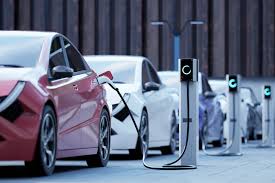
- The Charging Network Explosion: The infrastructure is catching up. Networks like Tesla’s Supercharger (now opening to other brands), Electrify America, and others are expanding rapidly. Charging at home remains the “killer app” for most owners—waking up to a “full tank” every morning is a game-changer.
The Auto Industry’s Trillion-Dollar Bet
This is critical. When giants like Ford, GM, and Volkswagen announce they will go fully electric in Europe by 2035 and are investing hundreds of billions, it’s not a gamble on a trend—it’s a strategic acknowledgment of the endgame. This commitment floods the market with choice: electric pickups (Ford F-150 Lightning), SUVs (Hyundai Ioniq 5, Kia EV9), luxury sedans, and affordable models. Consumer adoption follows choice.
A Changing Cultural Mindset
Public perception has flipped. EVs, led by Tesla, are now seen as aspirational, high-tech, and high-performance. They’re not just eco-cars; they’re the fastest, smartest, most innovative vehicles on the road. This cultural cachet is irresistible and pulls the market forward.
Navigating the Speed Bumps: Challenges on the Electric Road
Of course, the takeover isn’t instantaneous or without hurdles. Acknowledging these challenges is key to understanding the full picture.
- Upfront Cost: Despite TCO savings, the initial price remains a barrier for many, though competitive leasing and new, cheaper models are addressing this.
- Charging for Some, Not All: People without dedicated home parking (apartment dwellers, city residents) still face a logistical challenge. The solution lies in more ubiquitous public and workplace charging.
- Grid Capacity: Mass adoption requires a robust electrical grid. Upgrades and smart charging solutions are essential investments for the future.
- Raw Materials: Scaling battery production requires mining minerals like lithium and cobalt, raising ethical and environmental supply chain questions that the industry must address responsibly.
The key takeaway? These are not dead-ends; they are engineering and infrastructure problems with active, well-funded solutions in progress. They slow the transition but do not stop it.
The Road Ahead: What Does an EV-Dominant Future Look Like?
Imagine a world where EVs are the norm. The benefits compound:
- Quiet, Clean Cities: Urban centers become dramatically less noisy and polluted.
- Energy Independence: Nations can power transport with domestically produced electricity (renewables, nuclear) instead of imported oil.
- Vehicle-to-Grid (V2G) Integration: Your parked EV could act as a battery bank for your home during a blackout or even stabilize the community power grid, turning a cost center into an asset.
- New Design Freedoms: Without the constraints of traditional powertrains, car design could evolve in wild and wonderful new directions.
Conclusion: The Inevitable Journey
So, why are electric vehicles taking over the roads? It’s not one reason, but a powerful convergence. They offer a fundamentally better, simpler, and more enjoyable driving experience. They make compelling economic sense over time. They provide a clear path to a cleaner, healthier planet. And they are now backed by the full force of global industry and technological innovation.
The internal combustion engine had a magnificent, century-long run. But it is fundamentally a complex, inefficient, and polluting way to move a person a short distance. The electric vehicle, in its elegant simplicity, is the logical, superior successor. The takeover is underway because, in the final analysis, EVs are simply a better tool for the job. The road ahead is electric, and it’s not just a different route—it’s a better one.
FAQs
1. I live in an apartment with no charging spot. Is an EV even practical for me?
This is a very common and valid concern. While home charging is a major perk, it’s not an absolute requirement for everyone. The practicality depends on your routine. If you have reliable, fast charging at your workplace, or a convenient rapid charger near a place you regularly spend an hour (like a gym or supermarket), it can work seamlessly. Also, public charging networks are expanding rapidly in urban areas specifically for this demographic. It requires a bit more planning than home charging, but it’s increasingly feasible.
2. Are EV batteries really that bad for the environment when they’re made and thrown away?
This is a critical question. Yes, manufacturing an EV battery has a higher upfront environmental cost than building an engine. However, numerous lifecycle analyses show that within 1-2 years of driving (depending on the grid’s cleanliness), the EV “pays off” that carbon debt and becomes cleaner. On the disposal front, batteries are not thrown away. A robust recycling industry is scaling up to recover over 95% of key materials like lithium, cobalt, and nickel to make new batteries, creating a circular economy and drastically reducing the need for new mining.
3. Can the power grid actually handle everyone switching to EVs?
It’s a managed challenge, not a crisis. The grid will need to evolve, but the transition will happen gradually over decades. Importantly, most EV charging happens overnight during off-peak hours when electricity demand is low and there’s abundant capacity. Smart charging technology can even help balance the grid by shifting charge times to match renewable energy generation. Utilities see EVs as a new, manageable load and a potential grid-stabilizing asset.
4. Are EVs actually more expensive to insure?
Currently, they can be, but the picture is complex and changing. Higher repair costs for advanced technology and the high price of battery packs have led to higher premiums in some cases. However, as EVs become more common, repair networks become more proficient, and safety data (EVs often have excellent safety ratings) accumulates, insurance costs are expected to normalize and potentially even become lower due to fewer mechanical failure claims.
5. What about long road trips? Are they a hassle in an EV?
This was a major hurdle, but it’s getting easier every year. Modern EVs with 300+ miles of range can easily cover 2-3 hours of highway driving between charges. Planning a trip requires using an app to locate fast-charging stations along your route (usually near amenities). A stop to charge from 10% to 80% now takes 20-30 minutes on the fastest chargers—a perfect break for a coffee, snack, and restroom visit. It’s a different rhythm than a 5-minute gas stop, but for many, it leads to a more relaxed and safer journey.